1 Thessalonians 5:12-15 NLT
Dear brothers and sisters, honor those who are your leaders in the Lord’s work. They work hard among you and give you spiritual guidance. Show them great respect and wholehearted love because of their work. And live peacefully with each other. Brothers and sisters, we urge you to warn those who are lazy. Encourage those who are timid. Take tender care of those who are weak. Be patient with everyone. See that no one pays back evil for evil, but always try to do good to each other and to all people.
There is a word that cuts through the noise of self-focused living with remarkable simplicity. It is not a complicated theological term. It does not require years of study to understand. It is just one word, and yet it contains within it the entire shape of what Christian community is meant to look like. That word is others.
The Apostle Paul understood this. Writing to a young church navigating life in a deeply sinful culture, he offered some of the most direct and practical guidance found anywhere in his letters. The believers in Thessalonica were doing well. They were learning to follow Jesus in difficult circumstances, surrounded by opposition and temptation. And yet Paul did not write to them with congratulations alone. He wrote to them with a challenge. He wrote to them about how to treat each other, how to care for their leaders, and how to extend goodness beyond the walls of their own gathering.
The challenge he gave them is the same challenge that lands on every Christian community in every generation. Including ours.
Honouring Those Who Lead
Paul begins this section of his letter with a call to honour those who lead the church. He describes these leaders in three ways that are worth sitting with carefully. They work hard among the people. They lead the church in the way of righteousness. And they provide spiritual guidance.
Notice that the first thing Paul mentions is not authority or title. It is hard work. The original language carries the sense of working to the point of exhaustion. Church leaders, Paul is saying, are not figures sitting above the congregation at a comfortable distance. They are workers, labourers, people who pour themselves into the spiritual wellbeing of others. This is the foundation of the honour Paul calls for.
He does not ask church members to simply acknowledge their leaders. He asks for great respect and wholehearted love. The language is deliberately strong. Not mild appreciation. Not polite acknowledgment. Great respect. Wholehearted love. And the reason behind this is significant. The honour is not based on personality or personal preference. It is based on position, on the reality that these men and women serve as shepherds under the chief shepherd himself.
And the outcome of this mutual honour? Peace. A community that genuinely respects and loves its leaders, and in which leaders genuinely serve their people, is a community where peace can take root and grow.
Caring for Every Kind of Person
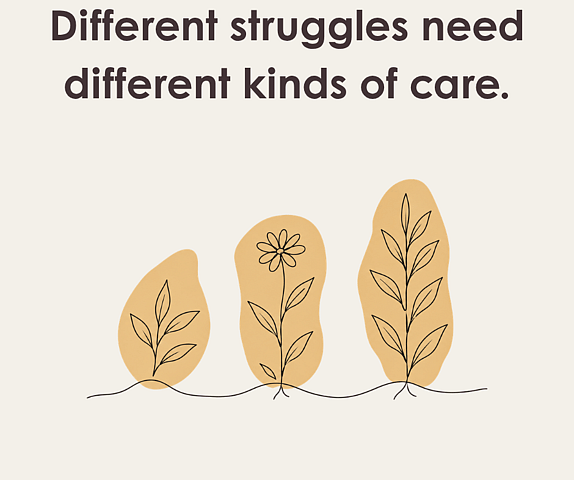
Paul then turns his attention to how leaders are to care for the people in their charge, and his instructions reveal something beautiful about the nature of Christian community. It is not a one-size-fits-all environment. Different people need different things.
Some people need a warning. Paul calls them the lazy or idle, those who have drifted out of line and need to be called back. This is not harsh judgment. It is loving honesty, the kind that a good shepherd offers a wandering sheep.
Some people need encouragement. The timid and faint-hearted, those who are more easily discouraged than most, need to be lifted up. They need someone to speak courage into them, to remind them that God has not given them a spirit of fear.
Some people need tender care. The weak, those still learning to lean on the Lord for their spiritual needs, need patient, gentle support. They need someone willing to walk beside them at their pace.
And over all of this, Paul places one sweeping instruction: be patient with everyone. This is not a footnote. It is the atmosphere in which all the other instructions are meant to breathe. Patience is the soil in which warning, encouragement, and tender care can actually take root and bear fruit.
The Refusal to Repay Evil
Paul adds one more dimension to this picture of community. He urges that no one pays back evil for evil. This is not a passive suggestion. It is a firm call to break the cycle of retaliation that so easily destroys relationships. In its place, Paul calls for an active pursuit of good, not just toward fellow believers, but toward all people.
This is where the word others begins to stretch beyond the boundaries of the church building. Doing good to all people is the language of evangelism, of witness, of a life so oriented toward others that it cannot help but spill out into the wider world. It is the posture of someone who has genuinely been transformed by the gospel.
Romans 12 captures this same spirit in vivid terms, describing a community where love is genuine, where honour is given freely, where hospitality is practiced eagerly, where evil is never repaid with evil, and where every effort is made to live peaceably with all people. The vision Paul holds out is breathtaking in its scope and demanding in its call.
A Hymn That Says It All
There is a hymn written by Charles Meagher, reportedly inspired by a one-word telegraph sent by General Booth of the Salvation Army to every post worldwide. The word in that telegraph was simply: others. Meagher took that word and built a hymn around it, a hymn that prays for a self-forgetful life oriented entirely toward the good of others.
One verse reads: Lord, help me live from day to day in such a self-forgetful way that even when I kneel to pray, my prayer shall be for others.
The chorus: Others, Lord, yes, others, let this my motto be. Help me to live for others that I might live like thee.
This is the heart of what Paul is calling every believer toward. Not a life of self-promotion or self-protection, but a life shaped by the same self-giving love that carried Jesus to the cross. Matthew 25:40 reminds us that what we do for the least of those around us, we do for him. Philippians 2 holds up Christ's humility as the model for how believers are to treat one another.
The question Paul's words leave us with is a searching one. Are we ready to make others our motto? Are we ready to honour, to encourage, to warn, to care, to be patient, to pursue good for all people, not just those who are easy to love?
That is the shape of a community that is truly ready.